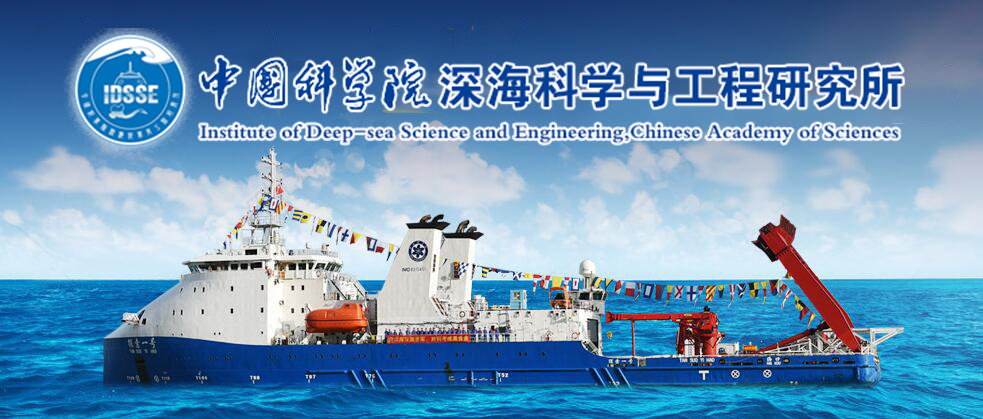

Two postdoctoral researcher positions are open in deep-sea science and astrobiology at the Institute of Deep-Sea Science and Engineering of the Chinese Academy of Science
文章來源: | 發布時間:2026-09-20 | 【打印】 【關閉】
IDSSE is a premier deep-sea institute of the Chinese Academy of Science, located in Sanya, on the tropical Island of Hainan of the South China Sea, in China. The institute is equipped with three research vessels, two manned deep-sea submersibles, and a plethora of state-of-the-art analytical facilities. For more information on IDSSE, please visit: ?https://english.idsse.cas.cn/?
Postdoctoral project 1 is on “Abiotic C cycle in deep-sea, deep-time, on the moon and on Mars” and will consist in establishing multidisciplinary comparisons between abiotic organic matter and biological organic matter in a range of natural geological specimens. These will include deep-sea volcanic rocks from the abyss and hadal zones of the ocean, Precambrian geobiological rocks, meteorites, and specimens returned from the Moon. This will involve the use of polarising microscopy, micro-Raman spectroscopy, nanofabrication by Focused Ion Beam (FIB), High-Resolution Transmission Electron Microscopy (TEM), and Nanoscale Secondary Ion Mass Spectrometry (SIMS) analyses. There will also be opportunities to prepare and analyze samples by Atom Probe Tomography (APT). Basic requirement includes a Ph.D. with a background in geochemistry, marine geology, and/or planetary sciences. Alternatively, the Ph.D could include a track-record of relevant experience and interest in Earth sciences, oceanography, or astrobiology. Research experience in petrography of thin sections, Precambrian geology, and/or experience with correlative microscopy is preferred, but not mandatory.
Postdoctoral project 2 is on “On the chemical origin of Turing patterns in life forms” and will investigate the model of chemically oscillating reactions (COR) in patterned fishes, corals, gastropods, bivalves, and other organisms living in the ocean. This work will involve COR experiments using a range of biochemicals, the use of micro-Raman spectroscopy, nanofabrication by FIB, HR-TEM, LA-ICPMS. Basic requirement includes a Ph.D. with a background in geochemistry and/or biochemistry. Alternatively, the Ph.D could include a track-record of relevant experience and interest in Earth sciences, marine sciences, or astrobiology. Research in geobiology, petrography of thin sections, chemical garden experiments, and/or experience with correlative microscopy is preferred, but not mandatory.
These positions are subject to the rules and regulations of Chinese Academy of Science and the work location of employment is in-person at IDSSE, in Sanya. Applicants should include a cover letter in English (max 1000 words), a curriculum vitae in English including a publication list, and contact information for three references. Materials should be sent directly to Prof. Dominic Papineau at (please delete spaces): dpapineau @ idsse.ac.cn

Copyright © 中國科學院深海科學與工程研究所 備案證號:瓊ICP備13001552號-1
 瓊公網安備 46020102000014號
地址: 三亞市鹿回頭路28號 郵編:572000 網站維護:深海所辦公室 郵箱:office@idsse.ac.cn
